
AI in a Day Success
A one-day Microsoft Copilot event brought 225 faculty and staff together for keynotes, ethics conversations, and hands-on agent building that turned AI from an abstract topic into a practical campus tool.
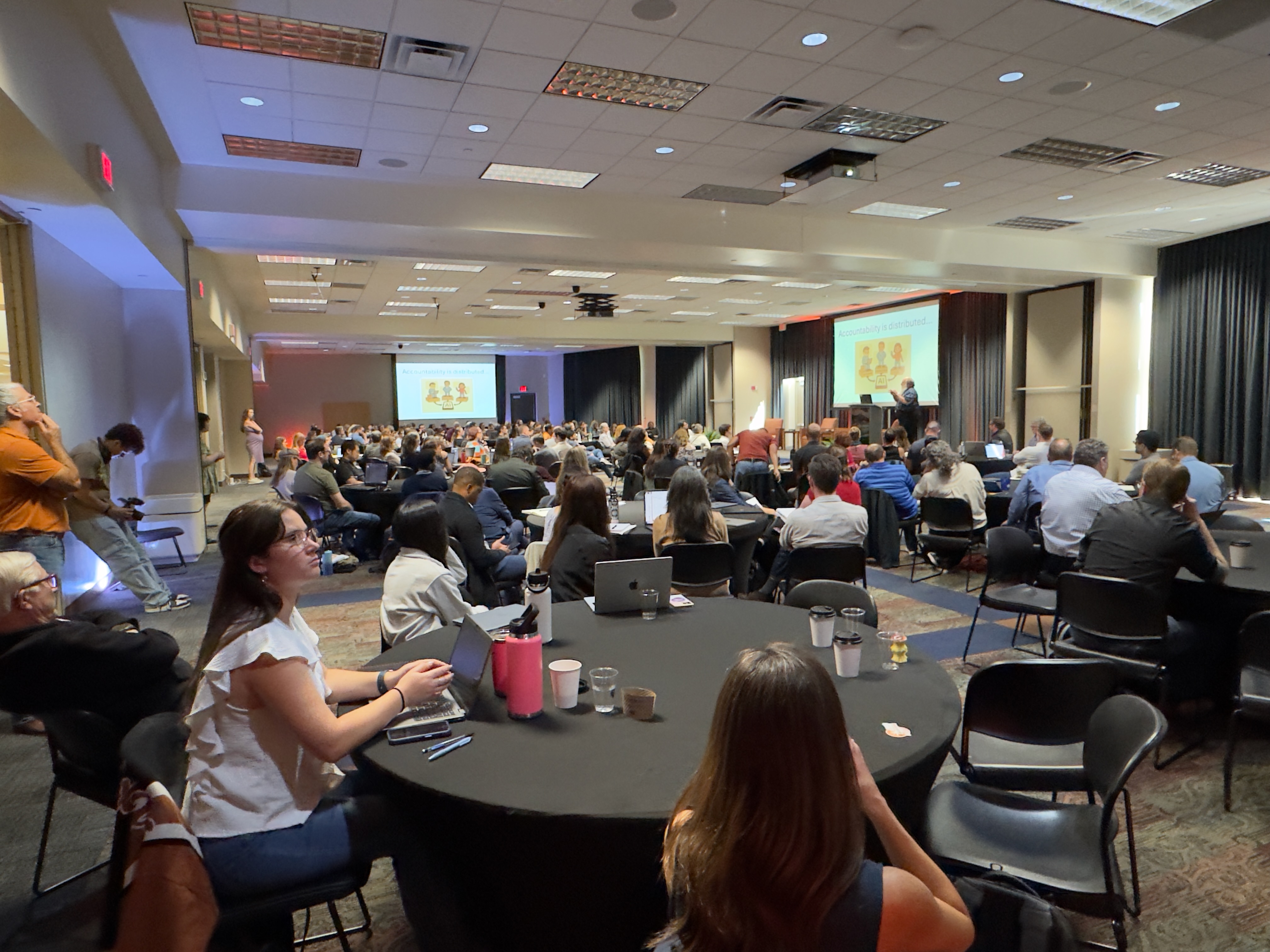
225 people. One day. A visible shift in how campus teams think about work with AI.
Presented by Enterprise Technology, Phygital Labs, and Microsoft, the day focused on practical use of Microsoft Copilot and responsible adoption in higher education.
AI in a Day closed with a clear signal for campus: when AI is presented as a concrete tool for teaching, administration, and collaboration, interest moves quickly from curiosity to action. The event gathered faculty and staff from across the university for a full-day program built around Microsoft Copilot, practical workflows, and responsible adoption.
Rather than framing AI as a distant strategy conversation, the sessions showed how it can support everyday work right now. Attendees saw examples of AI handling repetitive tasks, accelerating early drafting, and helping teams find more time for higher-value work that still depends on human judgment.
Transforming a campus conversation
The program combined outside perspective with local context. Becky Keene, CEO of Phygital Labs, delivered a keynote centered on the value of strategic partnerships. Kenneth R. Fleischmann from Good Systems added a higher-ed lens on responsible AI and ethics, grounding the conversation in the questions universities have to answer before scaling use broadly.
The strongest takeaway was not that AI is arriving on campus. It was that many UT teams are already at the point where they can begin using it intentionally, with clearer guidance and better shared language.
Hands-on work, not just presentations
The most important shift happened once attendees started building with the tools themselves. Workshops focused on practical Copilot use, including how to structure prompts, test ideas quickly, and create basic agents that map to real workflows.
That practical component mattered because it lowered the barrier to entry. Instead of leaving with a set of abstract ideas, participants left with a better sense of where AI could fit into their own teams and where it should be approached carefully.
At its best, the event showed that AI is not only about efficiency. It is about expanding what campus teams think they can build, automate, and improve together.
Examples close to home
The event also highlighted UT creators already deploying solutions in real settings. Examples from Dell Medical School, McCombs, and Procurement Services helped ground the day in work that felt immediately recognizable to the audience. That made the technology feel less speculative and more like a capability the university can shape for itself.
- Faculty and staff saw examples connected to real administrative and academic work.
- Responsible AI stayed part of the conversation instead of being treated as a separate track.
- The event connected experimentation with the support structures needed to scale adoption.
What comes next
Enterprise Technology signaled that this was not a one-off event. The next installment is already being planned, with future topics informed by ideas from the campus community. That follow-through matters. A successful event creates momentum; a series creates an ecosystem.
Campus community members are invited to share ideas for future sessions in the AI Conversations Teams channel. Those who want deeper access to Copilot can also request a license through the Microsoft form linked below.